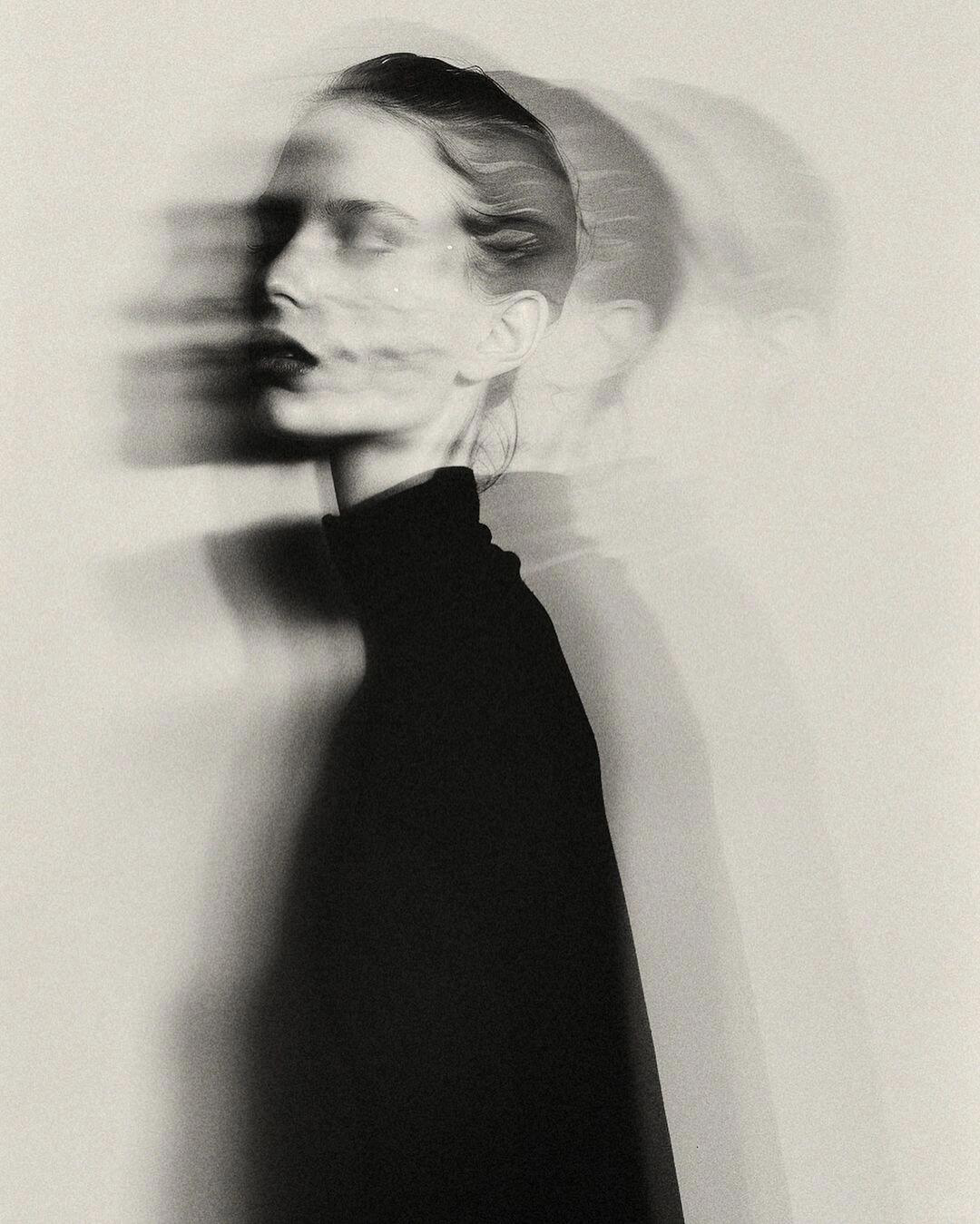

Seedance 2.0 cinematic AI video generation showcase with atmospheric lighting and motion effects

Latest public status

SEEDANCE2

Seedance 2.0 GuideLatest Public Status, Access & Workflows

Check the latest public Seedance 2.0 status in minutes.This third-party guide tracks official model claims, Dreamina access paths, and workflow notes.Topics: AI video generator; text-to-video AI; AI video generation for marketing; Runway Gen-3 alternative; Luma Dream Machine alternative; how to use Seedance 2.0 for video; best AI video generator comparison 2026; image to video with lip sync and multiple references.

Three Capability Angles To Review

This section highlights three Seedance 2.0 capability areas that are frequently referenced when reading the rest of the site.

Seedance2 Showcase - Camera movement references

Camera movement references

Use this entry to review how the site describes dolly zooms, focus shifts, tracking shots, POV changes, and other camera-motion references.

View capability page
Seedance2 Showcase - Action and physical behavior

Action and physical behavior

Use this entry to review action-heavy scenarios such as collisions, chases, debris, and other scenes where motion and physical interaction matter.

View capability page
Seedance2 Showcase - Native audio references

Native audio references

Use this entry to review how the site organizes examples related to voice, music, sound effects, and audio-video alignment.

View capability page

10 Key Capabilities

Fundamental Capabilities Enhanced: More Stable, Smoother, More Realistic

Seedance 2.0 evolves at the foundation, powering the full video production workflow from concept to final output.

More reasonable physicsMore natural, fluid motionMore precise instruction understandingMore stable style consistency

REFERENCE GALLERY

Browse representative materials and examples. Each item helps explain positioning, scenarios, and related reading paths.

Showcase

Seedance 2.0 AI-generated creative showcase scene 1
Seedance 2.0 AI-generated creative showcase scene 2
Seedance 2.0 AI-generated creative showcase scene 3
Seedance 2.0 AI-generated creative showcase scene 4
Seedance 2.0 AI-generated creative showcase scene 5
Seedance 2.0 AI-generated creative showcase scene 6
Seedance 2.0 AI-generated creative showcase scene 7
Seedance 2.0 AI-generated creative showcase scene 8
Seedance 2.0 AI-generated creative showcase scene 9
Seedance 2.0 AI-generated creative showcase scene 10
Seedance 2.0 AI-generated creative showcase scene 11
Seedance 2.0 AI-generated creative showcase scene 12
Seedance 2.0 AI-generated creative showcase scene 13
Seedance 2.0 AI-generated creative showcase scene 14
Seedance 2.0 AI-generated creative showcase scene 15

Camera motion

Seedance 2.0 cinematic camera motion tracking example 1
Seedance 2.0 cinematic camera motion tracking example 2
Seedance 2.0 cinematic camera motion tracking example 3

Reading path

Seedance 2.0 step-by-step workflow guide screenshot 1
Seedance 2.0 step-by-step workflow guide screenshot 2

Native audio

Seedance 2.0 native audio and dialogue generation example 1
Seedance 2.0 native audio and dialogue generation example 2
Seedance 2.0 native audio and dialogue generation example 3

A SIMPLE READING PATH

Seedance2 - READ THE OVERVIEW FIRST

READ THE OVERVIEW FIRST

Use the homepage and top sections to get a quick picture of the site scope and the main Seedance-related themes it covers.

Open overview
Seedance2 - THEN CHECK EXAMPLES

THEN CHECK EXAMPLES

Browse example-heavy sections to see which scenarios and capabilities are most relevant to your own context.

Open examples
Seedance2 - USE SUPPORTING PAGES FOR CONTEXT

USE SUPPORTING PAGES FOR CONTEXT

When you need more detail about site role, external links, privacy, or content permissions, continue into the guide and legal pages.

Open supporting pages

USED AS ASHAREABLE REFERENCE

Illustrative feedback and rough internal estimates from teams that used this site to review Seedance-related information more quickly.

Li Ming

Li Ming

Product Director, Leading E-commerce Company

5.0External Explanation Reference

When coordinating with external vendors about Seedance, everyone had a different version of the story, leading to constant back-and-forth. Now we send them the Seedance2 link first, and they usually get the basic picture in around 10 minutes. In our workflow, communication overhead dropped by roughly half.

Wang Fang

Wang Fang

Operations Lead, MCN Agency

4.0Intake Review Reference

We talk with dozens of client teams every month. Before, information requests were scattered across WeChat and email, making follow-up messy. Now we ask people to review the relevant Seedance2 pages first, and our follow-up notes stay far more organized.

Zhang Wei

Zhang Wei

Technical Co-founder, SaaS Startup

5.0Feature Review Reference

When I first looked into Seedance, about 15 minutes on Seedance2 gave me a clear picture of feature boundaries, video generation limits, and pricing references. Compared with other AI video evaluations, that likely saved two or three rounds of meetings.

Chen Ting

Chen Ting

Account Manager, Ad Agency

5.0Client Onboarding Reference

Explaining AI video generation to clients used to mean preparing PPTs, case studies, and quotes. Now we have them browse Seedance2 first, they learn the features and use cases on their own, then we follow up on specifics. In one sales flow, first-deal closure moved from about 2 weeks to roughly 3 days.

Liu Yang

Liu Yang

Content Lead, EdTech Company

4.0Shared Internal Reference

Our content, tech, and business teams used to give inconsistent explanations about Seedance. Now everyone uses Seedance2 as a shared reference page. That reduced internal debate and made external communication easier to align.

Zhao Min

Zhao Min

Marketing Director, Game Company

5.0Creative Planning Reference

For user acquisition creatives, outsourcing one video used to take about 3-5 days. Now with Seedance image-to-video, we can prepare around 10 test creatives in a day. The case studies on Seedance2 gave our team lots of creative references, and we got up to speed quickly.

Sun Hao

Sun Hao

Founder, Cross-border E-commerce Store

5.0Product Video Planning Reference

We sell home goods. Before, shooting a product video meant hiring a team and renting a studio, costing roughly 5,000 RMB or more per video. Now with Seedance text-to-video, a few product images can generate reference product videos for internal review. In our internal estimate, cost per video dropped to around one-tenth of before.

Zhou Xue

Zhou Xue

Product Manager, Short Video Tool

4.0Technical Review Preparation

We wanted to evaluate whether Seedance's video generation could fit our app. Seedance2 helped us organize the technical questions we needed to ask before deeper discussions. That made the later evaluation much more efficient.

Wu Lei

Wu Lei

Founder, Post-production Studio

5.0Concept Review Reference

When pitching to clients, creating storyboards and animatics used to take about a week of drawing and simple animation. Now with Seedance text-to-video, we input scene descriptions to generate concept videos in a shorter cycle. In one workflow, clients could review the concept in about 2 hours, and the proposal process became easier to move forward.

Zheng Ya

Zheng Ya

Visual Lead, Fashion Brand

5.0Visual Output Planning Reference

Each season we need reference videos for dozens of new outfits. Traditional shoots are constrained by venues and model availability. Now we use Seedance to turn static lookbooks into dynamic videos, producing more than 30 pieces in a busy week. Combined with filmed content, our total output roughly doubled in that workflow.

Lin Tao

Lin Tao

Enterprise Training Lead

4.0Training Content Planning Reference

Before, creating internal training videos meant hiring external vendors. A 3-minute video was usually quoted around 8,000-15,000 RMB. Now with Seedance, we generate explainer videos directly from course materials in-house. The process is easier to repeat, and our internal tracking showed quarterly training coverage moving from about 60% to 90%.

User 1
User 2
User 3
User 4

Used as a reference site by teams in e-commerce, advertising, education, gaming, film, fashion, and enterprise training

HOW TO CHECK SEEDANCE 2.0 ON THIS SITE

A simple reading path for official website checks, tutorials, and workflow questions.

Seedance2 overview: site scope and capability summary
STEP : 1

START WITH OVERVIEW AND ACCESS CONTEXT

Use the homepage to understand what Seedance 2.0 is, when it launched, and where official website or access checks belong.

Explore capability pages and representative use cases by topic
STEP : 2

OPEN THE GUIDE HUB AND WORKFLOWS

Go into the guides hub for tutorials, getting-started steps, workflow notes, pricing-and-access explanations, and compare pages.

Use FAQ and supporting pages to understand how this site organizes information
STEP : 3

USE FAQ AND SITE GUIDE FOR BOUNDARIES

Use the FAQ and site-guide pages to understand naming variants like Seedance 2, Seedance2, and Seedance 2.0, and to see when this site defers to official sources.

Learn / Tutorials

Learn Seedance 2.0 by topic

Use the guides hub to move from overview and tutorials into prompts, workflows, and use cases. This connects the homepage to the deeper pages users actually search for.

Seedance 2.0 FAQ

Quick answers for common searches such as official website, access, workflow, tutorial, and release-date questions.

No. This is a third-party explanatory site. For the official Seedance website, current access, and support, verify product-owner sources.

Use this site for orientation, then verify the current access path on official product-owner pages. Public access surfaces can change over time.

Seedance 2.0 was officially launched on February 12, 2026. Because access surfaces and product details can change after launch, use official sources for the latest availability.

Yes. The guide hub collects getting-started pages, workflow notes, tutorials, prompt references, troubleshooting, and compare pages for Seedance 2.0.

People often search those names interchangeably. On this site, Seedance 2.0 is the main guide cluster, while supporting pages also cover related naming variants and access questions.

It is useful for people researching Seedance 2.0, teams sharing internal reference pages, and anyone who wants quicker context before checking official sources.

It covers core capabilities and common use cases, including image-to-video, text-to-video, creative production, campaign content, education, and film previs. Exact scope depends on the module and your use case.

Yes. The site supports multiple languages so teams in different regions can review the same core information more easily.

If you want to reach our team about your own use case, use the contact flow on this site. Do not assume this domain represents official API, SDK, or business intake on behalf of Seedance unless a page explicitly says so.

This site itself does not guarantee a trial, demo, or commercial arrangement. If you follow a clearly labeled contact or external link, the available options depend on that destination and your specific use case.

Come with your goals, target use case, expected scale, current tech stack, timeline, and any compliance needs. The more concrete the context, the easier it is for us to understand and respond to the request.

Seedance 2.0 focuses on multi-modal AI video, strong visual control, and production-ready workflows. If you are comparing it with another tool, share your use case and we can explain the differences that matter most.

Yes, those are part of the broader Seedance capability set. The exact setup depends on the module you need and how you plan to use it in your workflow.

Generated videos include invisible watermarks and C2PA content credentials for provenance tracking. Visible watermark behavior depends on the platform and plan (e.g. free vs paid tiers on Dreamina or CapCut). ByteDance also enforces a real-face ban: Seedance 2.0 will not generate realistic human faces or likenesses of real people, and includes built-in IP-blocking safeguards. Usage terms vary by module and agreement.

Image input: up to 9 images (jpeg, png, webp, bmp, tiff, gif; under 30MB each). Video: up to 3 clips (mp4, mov; 2–15s total; under 50MB). Audio: up to 3 files (mp3, wav; under 15s; under 15MB). Mixed input cap: 12 files total. Output: 4–15 seconds, with built-in sound effects or music.

First/Last Frame: use when you only upload a first-frame image plus prompt. All-round Reference: use when you combine image, video, audio, and text. You specify each material's role with @material name (e.g. @image1 as first frame, @video1 for camera reference, @audio1 for music).

One practical structure is: 1) Subject - who or what is in the scene, 2) Action - a specific movement such as 'slow pan' or '360-degree orbit', 3) Camera - movements like tracking shot, dolly zoom, or Hitchcock zoom, 4) Environment - where the scene happens, 5) Style and lighting - references such as 'golden hour' or 'soft natural light'. It usually helps to avoid conflicting instructions. Example: 'A young woman in a white dress dancing under cherry blossoms, camera slowly moves from wide to medium shot, soft natural light from left, petals falling, shallow depth of field'.

Use the reference image system: 1) Generate your first character image and export an HD version, 2) For subsequent shots, click 'Import Reference Image', 3) Select the character image and check 'Subject/Character Face', 4) Set reference strength to 70-80% for natural results, 5) Keep lighting conditions and style descriptions consistent across shots. For multi-scene videos, use the same character reference throughout. Any cost or scale figures mentioned elsewhere on this site should be read as reference data tied to those examples, not guaranteed outcomes.

These pages describe camera moves such as tracking shots, dolly zooms, orbit shots, push-in and pull-out moves, pan and tilt, crane-like vertical movement, one-take long shots, and handheld or stabilized styles. Natural-language prompts such as 'slow dolly tracking shot following the character' are usually easier to manage. You can also upload reference videos and use @video1 to guide camera movement.

Seedance 2.0 accepts up to 12 reference files total: 9 images, 3 videos, and 3 audio tracks. Use the @mention syntax to specify each file's role: @Image1 as first frame or character reference, @Image2 for style or color palette, @Video1 for camera movement or choreography, and @Audio1 for music synchronization. In many workflows, one strong reference video is easier to manage than several weaker images. It also helps to list your files and their purposes before writing the prompt.

A common workflow is: 1) Start small with short test generations, 2) Change one variable at a time when a result misses the target, 3) If your setup includes lighter and higher-quality modes, use the lighter option for experiments and the higher-quality option for delivery, 4) Keep a reference library of character, camera, and style examples, 5) Prepare more than one aspect ratio when you need output for different channels, 6) Add scene details such as atmosphere, lens behavior, or depth of field only when they matter, 7) Combine AI generation with human editing tools for final polishing.

Seedance 2.0 runs entirely in the cloud on ByteDance's infrastructure, so you do not need a local GPU. A modern web browser and a stable internet connection are enough. For API access through BytePlus/ModelArk, the compute is also server-side. There is no publicly available self-hosted or on-premise deployment option as of March 2026.

Seedance 2.0 is developed by ByteDance's Seed research team. In China, Seedance capabilities may appear through Doubao (豆包) and Jimeng (即梦), ByteDance's consumer AI platforms. For international users, Dreamina and BytePlus/ModelArk are the main access surfaces. Seedance is the model; Doubao, Dreamina, and Jimeng are product frontends that may expose different subsets of its capabilities.

As of March 2026, Seedance 2.0 is publicly accessible through Dreamina (international) and Jimeng/即梦 (China), plus BytePlus/ModelArk for developers. Feature availability, pricing tiers, and queue priorities may differ by region and account type. Check the official access surface for your region to see the current feature set and any geographic restrictions.

ByteDance has not announced an official Seedance-specific Discord server as of March 2026. Community discussion happens across various AI video creator groups and forums. Check the Dreamina platform for any official community links. This third-party site also provides guides and resources, but is not affiliated with ByteDance.

No. As of March 2026, Seedance 2.0 is only available as a cloud-hosted service. There is no downloadable model, Docker image, or on-premise deployment option for individual users. Enterprise customers can access dedicated capacity through BytePlus/ModelArk, but this is still managed cloud infrastructure, not a self-hosted deployment.

Based on public tutorials, the most frequent issues are: overloading a single prompt with too many conflicting actions, burying the main subject behind decorative adjectives, mixing incompatible camera moves (e.g., 'fast zoom in' plus 'slow dolly out'), and forgetting to repeat character identity cues across multi-shot workflows. For detailed prompt tips, see our prompt best practices guide. Keeping prompts focused on one clear action per shot and front-loading the subject usually improves results.

According to public materials from ByteDance, Seedance 2.0 represents a major upgrade over version 1.0. Key improvements include native audio generation (sound effects and music built into the output), lip-sync for dialogue scenes, expanded multimodal input (combining images, video clips, and audio references in a single request), and longer output duration up to 15 seconds. Seedance 1.0 was primarily image-to-video and text-to-video without audio capabilities. Verify current feature availability on the official Seedance page.

Based on official demonstrations, Seedance 2.0 generates video at up to 2K resolution with durations ranging from 4 to 15 seconds. Multiple aspect ratios are available, including 16:9, 9:16, and 1:1, making outputs suitable for platforms from YouTube to TikTok. Output is typically delivered as MP4. Exact resolution options and quality tiers may vary depending on which access surface you use (Dreamina, Jimeng, or BytePlus/ModelArk API).

According to public materials, Seedance 2.0 can generate synchronized sound effects, ambient audio, and music alongside the video output — no separate audio editing step required. Lip-sync allows generated characters to move their mouths in alignment with spoken dialogue. For best results with lip-sync, public workflows suggest keeping dialogue short, ensuring the character's face is clearly visible in frame, and avoiding heavy action during speaking scenes. For more detail, see our glossary guide on native audio and lip-sync terms.

Seedance 2.0 accepts text prompts combined with reference images, video clips, and audio files — this is called multimodal input. You can tag each file's role using the @mention syntax (e.g., @image1 as first frame, @video1 for camera reference, @audio1 for music sync). The system supports up to 9 images, 3 video clips, and 3 audio files per request (12 total). For a deeper explanation, see our multimodal input guide.

As of March 2026, the main access surfaces are: Dreamina (international web-based creator platform), Jimeng/即梦 (China-focused platform), and BytePlus/ModelArk (developer API for programmatic access). Feature availability, pricing, and queue priority may differ across these surfaces. This site provides orientation and guides, but for the most current access instructions and pricing, check the official Dreamina or BytePlus documentation directly.

In Seedance 2.0's All-round Reference mode, you use @mention tags to tell the model how each uploaded file should be used. For example, @image1 can designate a first frame or character reference, @image2 might set a style or color palette, @video1 can supply camera motion to replicate, and @audio1 can provide music for synchronization. These tags give you granular control without writing longer text descriptions. For practical examples, see our glossary and multimodal input guides.

Text-to-video generates a clip entirely from a written prompt — the model decides all visual details from your description. Image-to-video starts from one or more reference images, so the model inherits composition, colors, and subject appearance from your source material. According to public guides, image-to-video typically produces more predictable results when you need specific visual fidelity, while text-to-video offers more creative freedom. Both modes can be combined with additional references and audio in Seedance 2.0's multimodal workflow.

Guides

Use the guides hub to move from overview and tutorials into prompts, workflows, and use cases. This connects the homepage to the deeper pages users actually search for.

READ THIS SITE AS CONTEXT

USE THIS SITE AS AN EXPLANATORY PAGE

Use Seedance2 to review Seedance-related capabilities, scenarios, and examples in one place. To try our AI tools, head over to Elser.ai.